The History of Balinese Silver, From Royal Courts to Your Workbench
· Updated · 4 min read
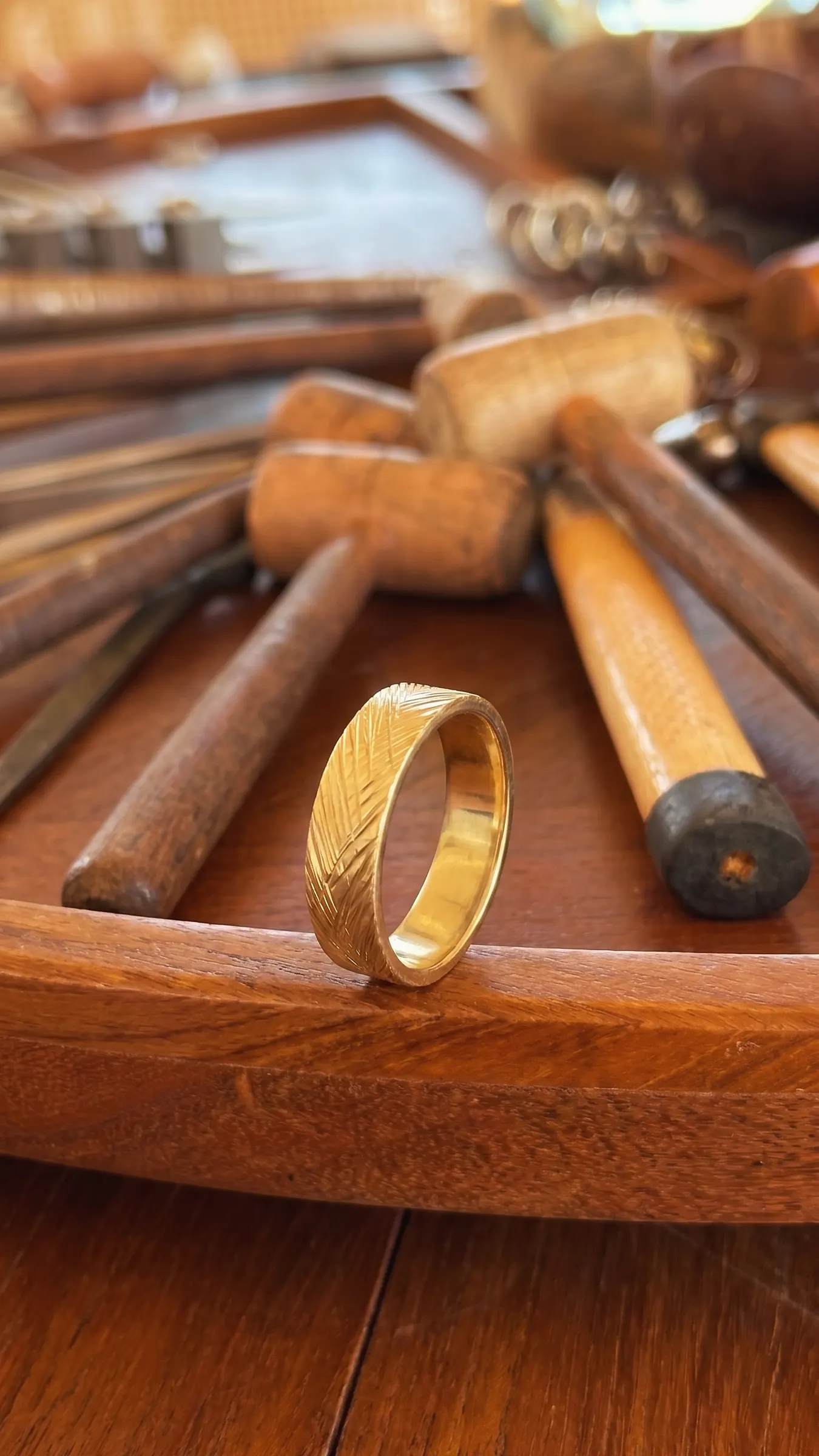
Balinese silversmithing is a craft passed down within families for centuries. It grew out of the island's smith clans, was refined by the court artisans who arrived from Java during the decline of the Majapahit kingdom, became the trade of whole villages such as Celuk, and from the twentieth century turned towards the jewelry visitors wear today. When you make a ring in a silver class, you use the same basic techniques: fire, hammer, saw and solder.
The Smiths of Bali
In traditional Balinese society, metalworkers belong to the Pande, a clan whose name simply means "smith". Smiths who worked gold and silver held a special place: they were trusted with fire, and with turning raw metal into objects used in temples and ceremonies. Making a ceremonial vessel or the fittings of a kris was not only technical work. It was surrounded by offerings and chosen days, because the objects themselves had a role in religious life.
That respect for the craft is still visible. Many Balinese silversmiths learned the trade the way it has always been learned: beside a parent, over a flame, one join at a time.
The Javanese Court Influence
Much of the refinement of Balinese metalwork is linked to the Majapahit kingdom of East Java, which flourished from the late thirteenth century. As Majapahit declined in the fifteenth and sixteenth centuries, priests, dancers and artisans from the Hindu-Javanese courts moved to Bali, bringing their court style with them.
Under Balinese rulers, silversmiths made ornament for royalty and temples: headdresses, armbands, offering bowls and the decorated parts of ceremonial weapons. Two decorative techniques became closely associated with Balinese silver:
- Granulation: tiny balls of silver fused onto a surface to build patterns and texture.
- Filigree: fine twisted wire laid into delicate, lace-like designs.
Both take years to master, and you will still see them in the finest work sold on the island.
Celuk, the Silver Village
For generations, the village of Celuk in Gianyar, not far from Ubud, has been the best-known center of the craft. Silverwork there was a family business: skills were handed from one generation to the next, and whole streets were lined with workshops. For many visitors, "Bali silver" and "Celuk" still mean the same thing.
From Ceremony to Everyday Jewelry
Originally, most silver was made for ceremony and for the courts. That changed in the twentieth century. As artists and then travelers came to Bali, demand turned towards wearable jewelry: rings, earrings, bracelets and pendants. The smiths adapted, applying old techniques to new forms, and Balinese silver jewelry found buyers around the world.
Learning the Craft Yourself
As tourism spread to the south of the island, so did the craft. On the Bukit peninsula, silver classes now let visitors sit at the bench instead of only buying across a counter.
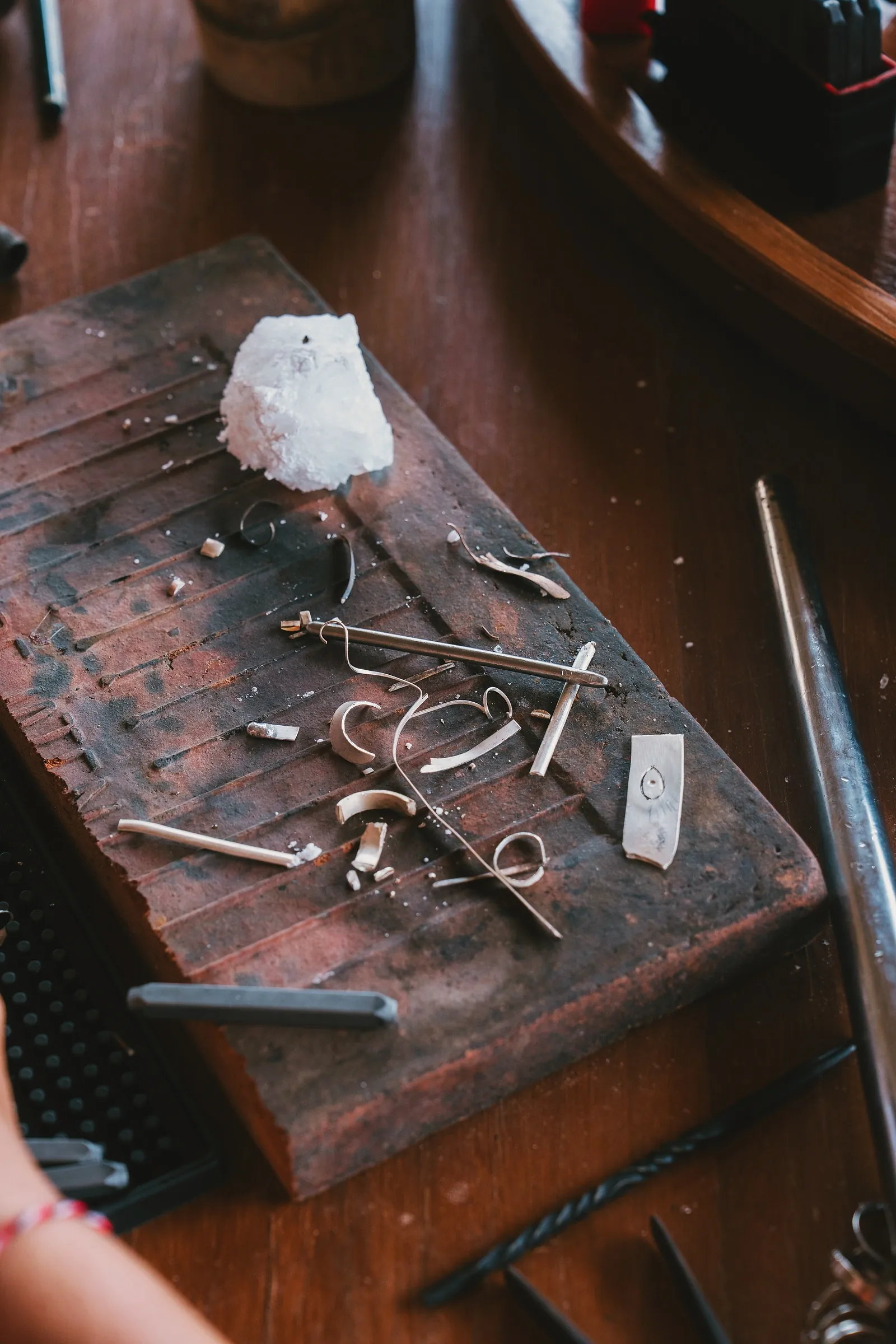
A beginner's class does not teach granulation or filigree. It teaches fabrication, the foundation every silversmith starts with:
- Melting pure silver grain over charcoal and torch.
- Rolling it through the mill into a strip or wire.
- Sawing and shaping it around a mandrel.
- Soldering the join with the flame.
- Filing and polishing until the metal holds light.
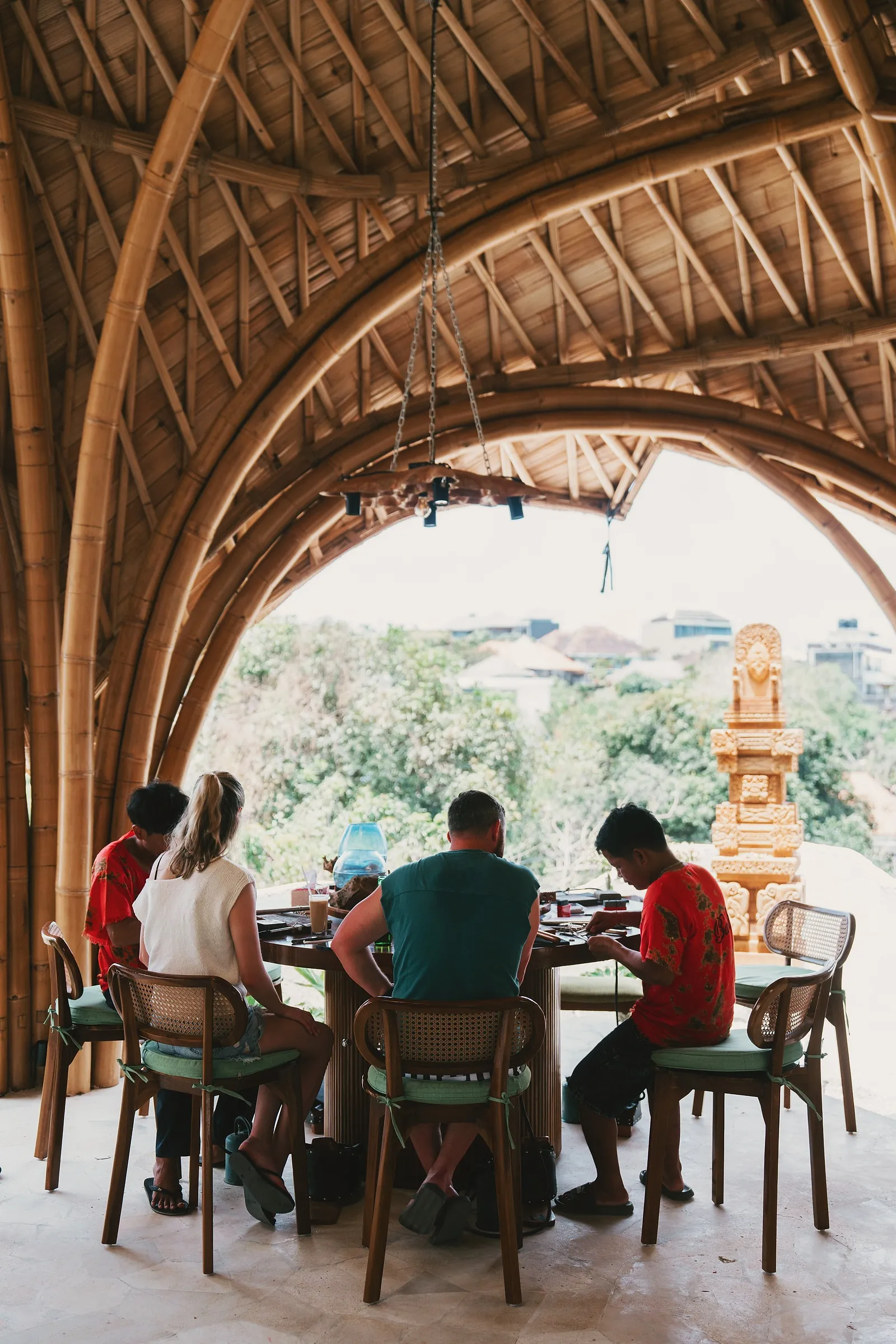
At Bali Jewelry House in Uluwatu, this is what the Silver Class covers in one to two hours, with one to six grams of pure silver and a Balinese silversmith beside you. The Brass Jewelry Workshop uses the same hand techniques in solid brass and finishes the piece in gold plating. For a closer look at each step, read what to expect at a silver class.
A Craft in a Balinese House
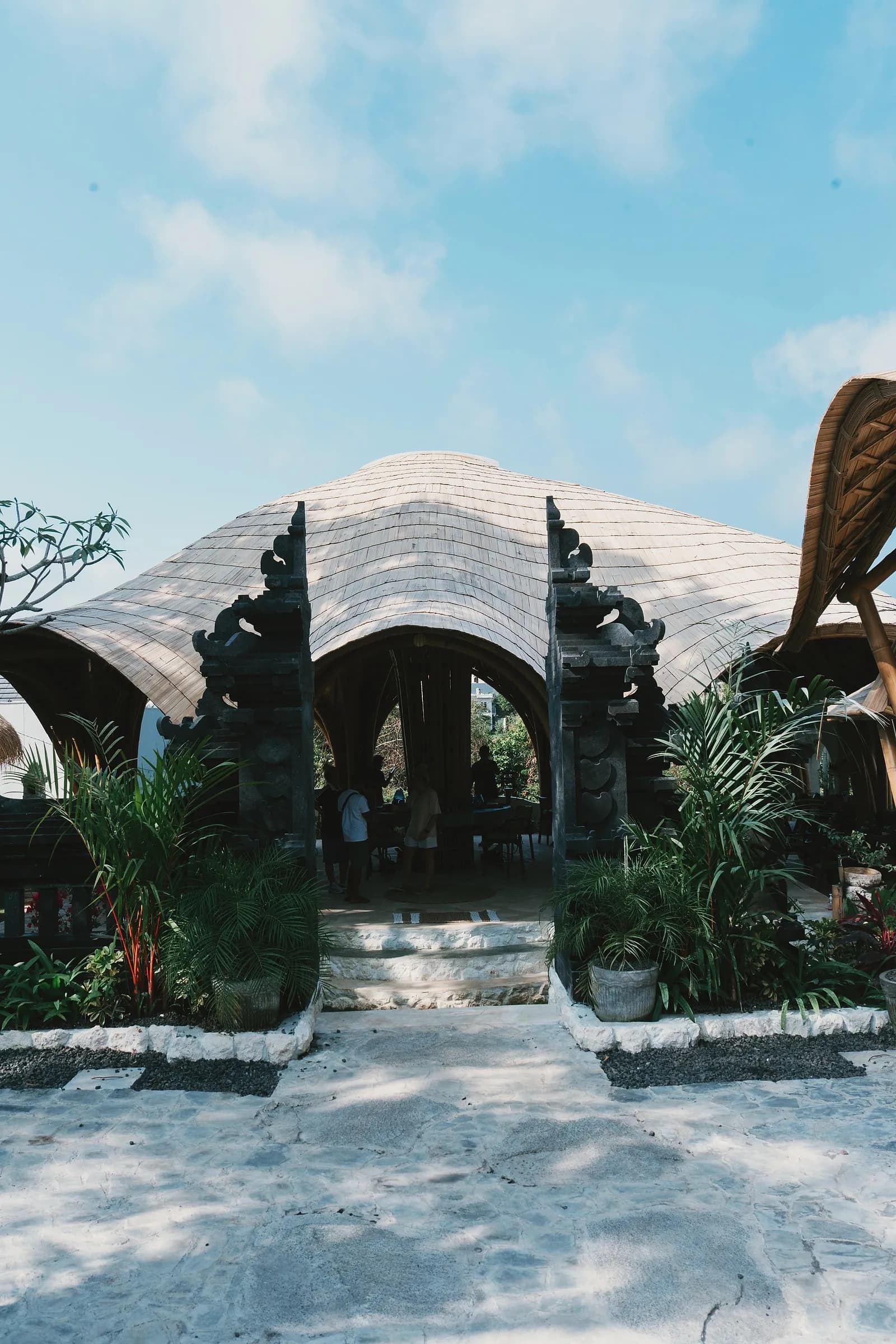
The setting matters too. Classes at Bali Jewelry House take place in The House, built of woven bamboo, entered through a carved candi gate, with Balinese paintings and carvings throughout. It is a reminder that in Bali, craft has always lived close to daily life and ceremony, not in a separate world. You can read more about the studio on our about page.
Why Silver Lasts
Silver is durable. A well-made ring can be worn for decades and passed on. The piece you make in class carries the memory of your trip, and it also carries a small part of a long Balinese tradition: the same metal, the same fire and the same basic movements that smiths on this island have used for centuries.
Frequently Asked Questions
What is Balinese silver known for?
Balinese silver is known for fine handwork, especially granulation (tiny fused balls of silver) and filigree (twisted silver wire), techniques linked to the Hindu-Javanese court traditions that came to Bali with the decline of the Majapahit kingdom. Today it covers both traditional ornament and modern jewelry.
Where is the silver village in Bali?
Celuk, in the Gianyar regency not far from Ubud, is Bali's best-known silver village, where silverwork has long been a family trade. Silver classes are also held in other parts of the island, including Uluwatu in the south.
Can I learn Balinese silversmithing as a tourist?
Yes. A beginner's silver class teaches the foundations of fabrication: melting, rolling, sawing, soldering and polishing. At Bali Jewelry House in Uluwatu you make your own ring, pendant or earrings in one to two hours, guided one-to-one by a Balinese silversmith, with no experience needed.